By Hanna Kaye Verhagen, RCC, CCC, MC, DVATI, BA
The short answer: talk therapy works with words, art therapy works with images and process, and a lot of people benefit from a blend of both. Neither one is “better.” They’re different doors into the same room. If you’re in Victoria, BC and trying to decide between the two, or wondering what art therapy involves, here’s a breakdown.
What Is Talk Therapy?
Talk therapy is what most people picture when they think of counselling. You sit down with a therapist and talk through what’s going on: your thoughts, your patterns, the things that are weighing on you. It relies on language to process emotion and make sense of your experience.
It works well when you already have words for what you’re feeling, or when putting things into language is itself part of the healing.
What Is Art Therapy?
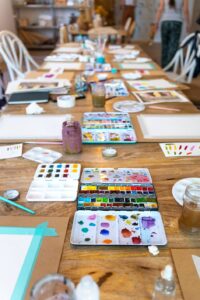
Art therapy uses image-making alongside talk therapy, not instead of it. You might draw, paint, collage, or work with clay, guided by a trained art therapist who helps you explore what shows up in the process and the image. The value is in what the making reveals, not in how the final piece looks.
Some people also find that having something to do with your hands can be less intimidating than solely talking head-on with a therapist or counsellor. Art-making gives your attention somewhere else to go and the materials become part of the conversation.
(Please note: to ensure you are working with a trained art therapist, check with the Canadian Art Therapy Association‘s educational requirements or their directory of art therapists).
The Real Difference Between Art Therapy and Talk Therapy
The core difference comes down to access. Some emotions and experiences are hard to reach through words alone, especially ones that are more felt than thought. Art therapy gives you a second language for the things you don’t have words for yet.
In practice, sessions often move between both. We might talk for a while, then shift into art-making when words start to feel like they’re circling in the same spot. Art can open a side door into something talk therapy alone hasn’t quite reached.
Do You Need Art Experience for Art Therapy?
No art experience needed. That’s the most common hesitation I hear, and it’s the first thing I tell people: this isn’t about skill or talent. You don’t need to be “good at art” for it to be a good fit. A scribble, a colour choice, or a shape can carry as much meaning as a technically skilled drawing.
If the idea of making art feels intimidating, that’s normal, and there’s no pressure either way. We move at your pace.
Which One Is Right for You?
A few things to consider:
- If you process best by talking things through out loud, talk therapy alone might be what you need.
- If you’re someone who feels things deeply but struggles to name them, art therapy can help access what’s underneath.
- If you’ve done talk therapy before and hit a wall, adding art to the process can shift something that words alone cannot.
- If you’re not sure, that’s fine too. With most clients I use a blend of both, and we adjust the mix session-by-session based on what’s the most useful that day.
Quick Answers
Is art therapy only for people who are “creative”?
No. Art therapy is for anyone willing to try a different way of exploring what’s going on inside. Creativity is a byproduct not a prerequisite.
Can art therapy replace talk therapy completely?
It can, but most people find a combination works best. Sessions can be entirely art-based, entirely conversation-based, or anywhere in between depending on what you need that day.
Is art therapy evidence-based?
Yes. It’s recognized as an effective approach for processing anxiety, stress, grief, and trauma, and pairs well with other evidence-based approaches like Acceptance and Commitment Therapy (ACT).
Where can I try art therapy in Victoria, BC?
I offer individual art therapy and counselling sessions, both in-person in downtown Victoria, BC and online in BC and Western Canada. I also facilitate arts-based wellness workshops for individuals and groups who are interested in learning ways to incorporate creativity and art-making into their own wellness practice. To find an art therapist in your area I recommend checking the Canadian Art Therapy Association’s Directory of Art Therapists.
Is art therapy covered by my benefits?
Most benefits plans that offer counselling coverage in BC cover services provided by a Registered Clinical Counsellor (RCC) or Canadian Certified Counsellor (CCC). Since I am an RCC and CCC in addition to an art therapist, my services are generally covered. Make sure to check with your benefits provider to be sure!